Showing posts with label street. Show all posts

Saturday, May 28, 2011

Seeing Invaders

Browsing through some of my Bangkok photographs I came across one with a mosaic Space Invader character. These little creatures are the work of a French artist (you can read more in a wikipedia article about the Invader and the characters inspired by the Space Invaders game), although I assume there are some copycats, too. I remember seeing many an invader during my travels and often photographing them. Here are some I could find from my archives.

Let's start with Paris, where the Invader started his project in 1998. These two photographs were taken with the excellent Sigma DP1 camera, which I have since sold.

Paris, 2008 - Sigma DP1, 1/500, f/7.1, ISO 200
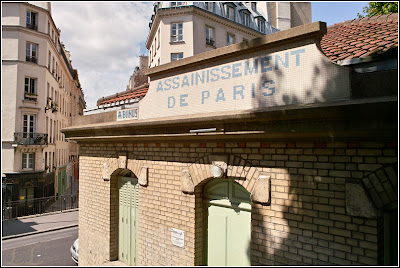

Paris, 2008 - Sigma DP1, 1/160, f/8, ISO 100


The next two photographs I composed with some colour repetition in mind. The first one connects the invader to the person walking the road below via repeating colours. The second photograph is the one from Bangkok that inspired this blog post. The yellowish orange colour of the wrist band is repeated in the mosaic. In addition, the pattern of the legs is repeated in the tentacles of the invader. Not the greatest framing, but I quite like it.

Lausanne, 2008 - Canon 30D, 1/640, f/4, ISO 100


Bangkok, 2011 - Leica M8, 1/180, ISO 160

Tuesday, April 26, 2011

Bangkok transportation

Some photographs from the busy streets of Bangkok:

Bangkok, 2011 - Leica M8, 1/180, ISO 320


Bangkok, 2011 - Leica M8, 1/180, ISO 640


Bangkok, 2011 - Leica M8, 1/250, ISO 640


Bangkok, 2011 - Leica M8, 1/250, ISO 320

Friday, October 29, 2010

The colour and the shape

Three cities, three cameras, three photographs.


Hamburg, 2009 - Epson R-D1, 1/450, ISO400


Paris, 2010 - Leica M8, 1/360, ISO160


Tampere, 2010 - Kodak BW400CN

Friday, October 8, 2010

Markets, street vendors

Markets are often great places for street photography. Or is that market photography then? Anyway, with people interacting with each other and going on about their business, the photographer is often ignored. The markets are also full of colour and interesting shapes. Sometimes too full which easily makes photographs too cluttered if you don't simplify them enough. Often you however don't have the choice if you really want the shot. It's also worth hanging around street vendors. They are basically small, simple markets, which helps remove some of the movement and clutter while providing good opportunities for interesting photographs.


Paris, 2010 - Leica M8, 1/125, ISO 160


Helsinki, 2009 - Epson R-D1, 1/2000, ISO 200


Tampere, 2009 - Epson R-D1, 1/450, ISO 400


Sometimes it's the advertising that catches your eye:


Tokyo, 2010 - Leica M8, 1/125, ISO 320


The Leica M8 photos were taken with the Voigtländer 15/4.5 Super Wide Heliar and the Voigtländer 35/1.4 Nokton SC, respectively. The Epson R-D1 photos, on the other hand, were with the Leica Summicron-M 50/2 and the Voigtländer 35/1.4 Nokton SC.

Saturday, August 28, 2010

Pictures from Paris

It has been a couple of weeks since my last post, so let's follow up with some recent photographs. These pictures are from Paris. There is no central theme covering them all, but each three sets of two photographs have something in common: street scenes, kids reacting to their surroundings, and people sleeping. Enjoy!


Paris, 2010 - Leica M8, 1/125, ISO 160


Paris, 2010 - Leica M8, 1/250, ISO 320


Paris, 2010 - Leica M8, 1/180, ISO 160
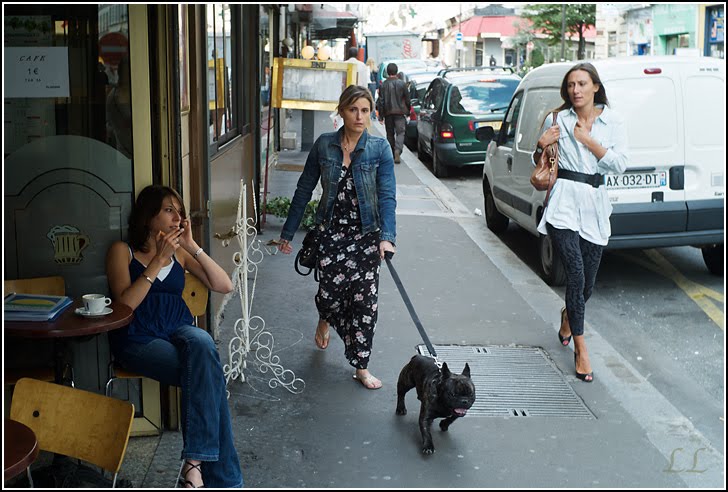


Paris, 2010 - Epson R-D1, 1/450, ISO 400


Paris, 2010 - Leica M8, 1/500, ISO 160


Paris, 2010 - Epson R-D1, 1/600, ISO 200


All these pictures are pretty much uncropped except for the one of the boy chasing the pigeon, which I found best to crop to a square format. The lens I used for all the Leica M8 pictures is the Voigtländer 35/1.4 Nokton SC, while both Epson images were taken with a Leica Summicron-M 50/2 lens. These focal lengths correspond to about 45 mm or 50 mm for the M8 and 75 mm for the Epson in 35-mm equivalent terms.

By the way, the Epson re-covering job mentioned in a past post is still upcoming and definitely not forgotten.

Thursday, August 12, 2010

Film shots from Naxos

Some more pictures from Naxos. These are all unedited, uncropped, almost straight from the scanner. The obvious tweaks are removing of most dust spots and resizing for web. That's it. I used an Epson V700 flatbed scanner for scanning. It is a fairly affordable option for film scans and it sings with larger film sizes. These images were made using 35-mm film in my Voigtländer Bessa R2A, so for optimal quality one should use a dedicated film scanner. For medium size prints, a good flatbed such as the V700 will do. For web images like these, it is even seriously overkill.

Less talk, more pictures.

Naxos, 2010 - Fujifilm Superia 200


Naxos, 2010 - Fujifilm Superia 200


Naxos, 2010 - Fujifilm Superia 200


Waffle house, Naxos, 2010 - Fujifilm Superia 200


Did someone tell you film is dead? Perhaps they meant some other film.

Friday, July 2, 2010

Experimenting with the Bug

Last time I wrote about getting two soft releases for my rangefinder cameras. I have now run some Bug experiments. This means using the Bug soft release on my Epson R-D1 in my everyday photography. I haven't really done any low-light shooting and therefore haven't faced slow shutter speeds. So, the added stability is still a bit of a mystery. The overall feel of the camera and the control of the point of releasing the shutter is improved, though. That alone is worth the price, should I find there is no other benefit in the end. Well, there actually is at least one other benefit. Shooting with gloves was never this easy! It will be a couple of months before I will consider wearing gloves, but I just had to quickly try on a pair when the idea came to me. Wearing gloves in July obviously isn't too comfortable!

I browsed through some of my photographs looking for ones that show the kind of motion blur I'm trying to fight with the Bug. There were some so-so ones. I think I have culled most of those that don't work with a bit of camera shake thrown in. Here's anyway one shot I came across. Not a good example of anything I have discussed so far really, but a nice shot demonstrating another source of shakiness: a moment that is a bit too fast or otherwise takes you by surprise forcing you to trigger the shutter while in motion.


Woman in Hamburg, 2009 - Epson R-D1, 1/100, ISO 400

This shot doesn't appear too soft at this size, but there is some motion blur in it. I was standing there by the Hamburg Philharmonic Hall Pavilion all by myself, facing the other way. As I turned around to look for a shot, this lady who had just appeared from somewhere without me noticing her was stepping to the horn. I barely had time to check my pre-focus for this shot. As she leant in to listen to the sounds from the horn, I quickly brought the camera to my eye and saw the expression I had anticipated. Preferring the moment over the technical merit of the shot, I took it without steadying my camera. She noticed me only the very moment I had my camera to my eye and made the photograph, which shows through as faint surprise mixed with curiousness in her expression.

Shot at 1/100 this photo is far from a slow shutter speed image where the soft release should help the most. Based on my experience over these couple of days, I think it could however help a bit with shots like these as well. Even if only by making one more confident with one's camera.